
REVIEW · BULAWAYO AND MATOBO HILLS TOURS
Matobo Rhino Encounter
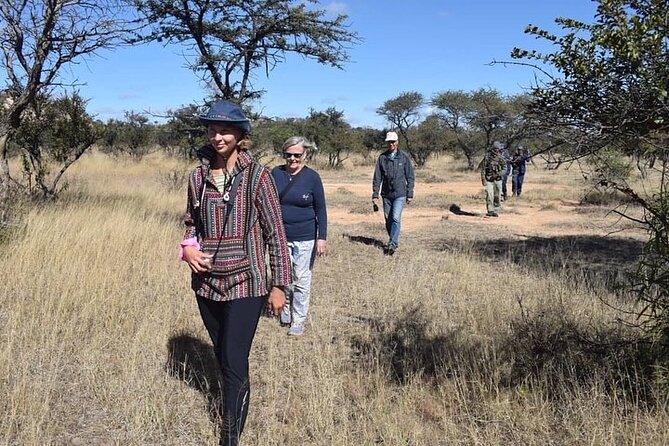
This is no ordinary game drive. The Matobo Rhino Encounter brings you into Matobo National Park on foot, where a local guide and park rangers help you read tracks, plants, wind, and animal dung before leading you close to white rhinos. I like the small group, capped at eight people, and the chance to meet rangers who protect these endangered animals. The main thing to consider is the long afternoon: you need to be comfortable walking outdoors for roughly five to six hours.
I also like that the outing reaches beyond wildlife photographs. You learn about old survival skills, see thousands-year-old San cave paintings, and finish with snacks and sundowners as the light fades. Pickup, lunch, bottled water, refreshments, digital photos, and a barbecue are included, which makes the $120 price easier to justify. Still, this is not a quick rhino sighting. Bring proper shoes, sun protection, and patience.
In This Review
- Key points to know before booking
- Why this Matobo walk feels different
- The 1:00 pm pickup and drive into Matobo
- Tracking white rhinos with a guide and ranger
- Reading footprints, dung, and useful plants
- A cave filled with ancient San paintings
- Meeting the rangers who protect the animals
- Barbecue lunch, refreshments, and sunset drinks
- Is $120 a fair price?
- Who will enjoy this experience most?
- Practical advice for a better afternoon
- Should you book the Matobo Rhino Encounter?
- FAQ
- Where does the Matobo Rhino Encounter take place?
- What time does the tour start?
- How long does the experience last?
- How many people can join the tour?
- Is hotel pickup available?
- What is included in the price?
- Can I cancel for a full refund?
Key points to know before booking
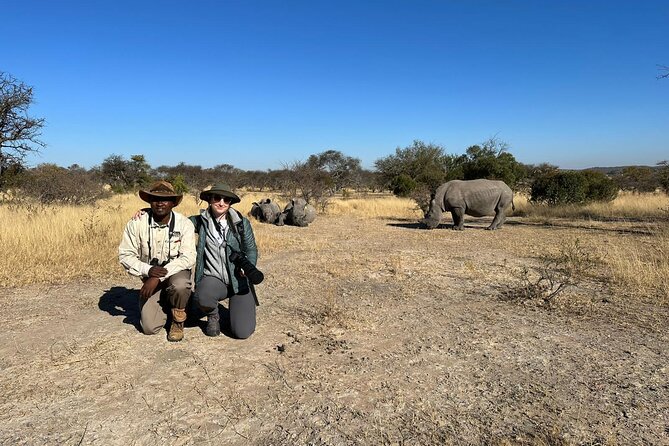
- White rhinos are approached on foot: You may spend meaningful time near the animals instead of viewing them only from a vehicle.
- The group never exceeds eight people: That gives you a better chance to hear the guide and ask questions.
- Ancient survival skills shape the walk: You learn about footprints, dung, medicinal plants, and natural remedies for snake bites.
- San rock art adds a cultural layer: A large cave contains paintings made thousands of years ago.
- The afternoon ends at sunset: Snacks and sundowners provide a relaxed finish after the bush walk.
- The $120 fee covers several extras: Hotel transfers, lunch, drinks, refreshments, and digital photos are included.
Why this Matobo walk feels different
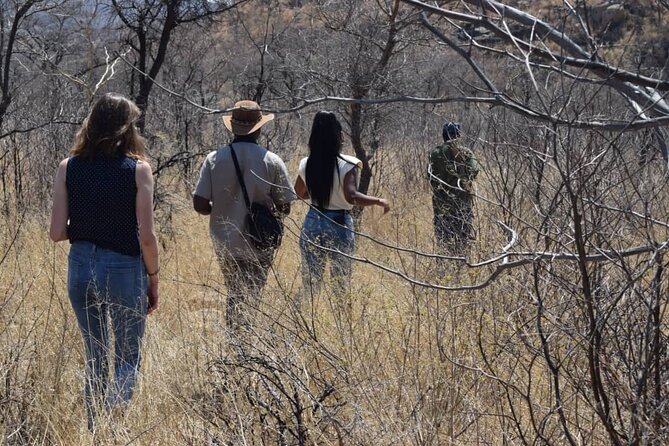
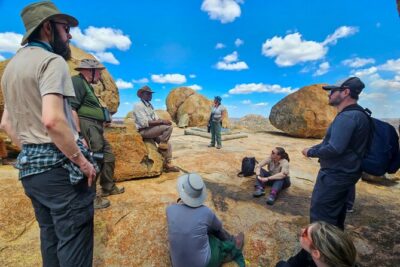
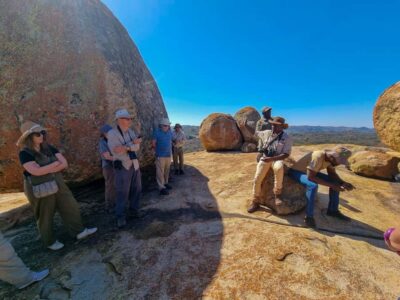
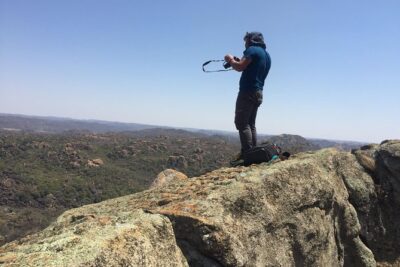
Matobo is a place where wildlife and human history share the same setting. The granite hills, open savannah, caves, and scattered plants create a natural classroom. Instead of simply counting animals, you spend time learning how people and wildlife use the same ground.
The experience is built around the Mzingeli, the Hunter theme. That means the guide asks you to pay attention to clues that are easy to miss from a vehicle. A footprint can suggest an animal’s direction. Dung can help identify what passed by. Plants may have practical uses, including traditional remedies for snake bites.
I like this approach because it gives the walk purpose. You are not just waiting for a rhino to appear. You are learning how to notice the bush before the animal comes into view.
The word hunter here refers to observation and survival skills, not hunting wildlife. The focus is on old methods used by ancestors in a difficult savannah environment and on modern conservation work carried out by park rangers.
More trips around Bulawayo and the Matobo Hills:
- The Best of Matobo
★ 5.0 · 39 reviews - Matobo Hills Day Trip with Rhino Tracking
★ 5.0 · 22 reviews - Matopos Half Day Excursion
★ 4.5 · 15 reviews
The 1:00 pm pickup and drive into Matobo
The experience begins at 1:00 pm, with pickup offered. One account describes a drive of about 30 minutes to Matobo National Park, though your exact transfer time depends on where you are staying.
That afternoon start works well if you do not want an early-morning safari. It also sets up the best light for the final part of the outing, when the group stops for snacks and sundowners near sunset. The trade-off is that you have less daylight than on a full-day morning departure, so the schedule may feel busy.
Pickup is more than a small convenience. Matobo is outside the main urban area, and having transport arranged lets you focus on the park instead of working out a separate ride. Confirm your pickup details when booking, since the published information gives the start time but not one universal hotel pickup hour.
The tour is offered as a mobile ticket, and confirmation arrives at booking. Public transport is available nearby, but the pickup option is the sensible choice for most people.
Tracking white rhinos with a guide and ranger
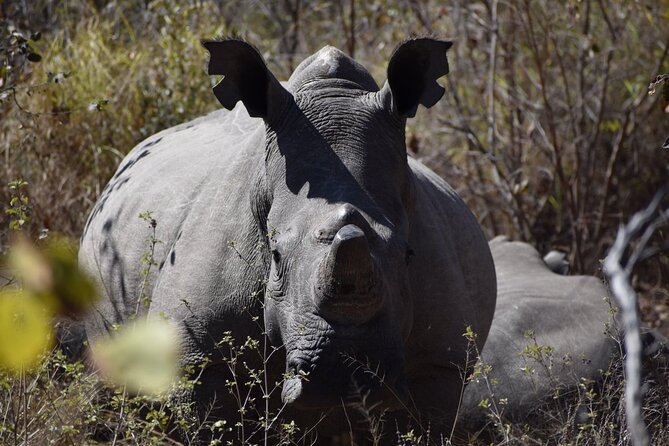
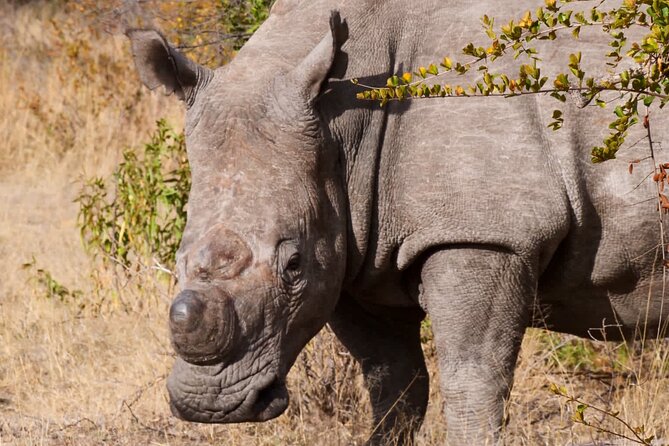
The central moment comes when you leave the vehicle and walk in the rhino’s habitat. A local guide leads the way, with park rangers involved in the wildlife encounter and conservation side of the visit.
The approach depends on careful reading of conditions. The guide watches the wind direction and pays attention to rhino behavior. That matters because scent can carry through open ground, and a careless approach could disturb the animals. Your job is to stay close to the group, listen carefully, and follow instructions.
White rhinos are large, powerful animals, but they are not presented as tame photo props. The value of this experience comes from seeing them in their natural setting while trained people manage the distance and movement. You may get close enough for strong photographs and video, but the exact sighting and time near the animals cannot be guaranteed in advance.
One outing described seeing two rhinos soon after entering the park and spending about 25 minutes nearby. That is a generous amount of time for watching behavior and taking pictures, but you should treat it as a possible result, not a promise. Wildlife does not follow a timetable.
The small group makes a real difference here. With no more than eight participants, the guide can keep the party together and explain what is happening without shouting across a large crowd. You also have a better chance of getting an unobstructed view.
Reading footprints, dung, and useful plants
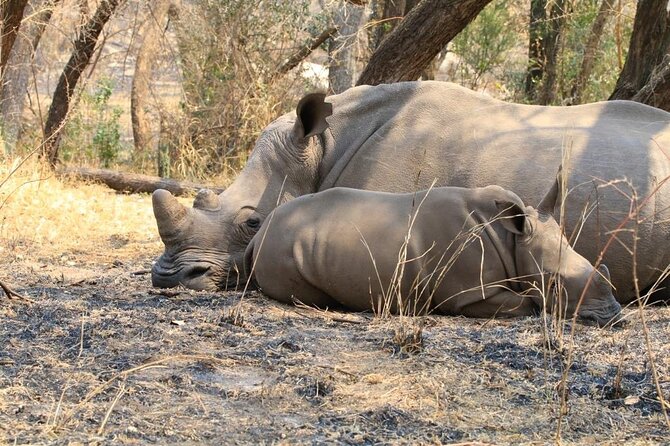
The bush walk is not only about reaching the rhinos. Your guide explains how to read signs left behind by animals and how to identify plants that have practical value.
Footprints are the clearest clue, but they are not always easy to interpret. Weather, wind, and other animals can blur them. Dung may offer another clue, especially when combined with tracks and the location where you find it. These lessons give you a way to understand animal movement even when no creature is visible.
The plant section adds another useful layer. You learn about medicinal plants and natural remedies linked to the old survival skills of the region. The example provided is treatment for snake bites, but you should listen as a cultural and educational lesson, not as a substitute for modern medical care.
I appreciate that the experience asks you to use more than your eyes. You hear the bush, notice smells, and watch how the guide responds to the wind. That sensory attention can make an ordinary patch of ground more interesting than it first appears.
You should also expect uneven outdoor walking. The advice to wear closed-toe shoes is important, not decorative. Khakis, a sun hat, sunscreen, and bug spray are sensible choices for an afternoon in the park. Bring a camera if you want photos, but keep your attention on the guide and the animals.
A completely different kind of day:
- Helicopter Scenic Flight over Victoria Falls 12-13 minutes Flight
★ 5.0 · 1,391 reviews - Victoria Falls: Dinner Cruise on the Zambezi River
★ 4.9 · 925 reviews - Victoria Falls: Chobe National Park Day Trip with Lunch
★ 4.7 · 518 reviews - Dinner Cruise on the Zambezi River
★ 5.0 · 518 reviews
A cave filled with ancient San paintings
The cave stop changes the pace of the day. After the wildlife tracking, you visit one of the largest rock caves in the park, where ancient San paintings cover the stone.
These paintings are thousands of years old and connect the present-day walk with the people who once lived by hunting and gathering in this harsh environment. The cave is not simply a scenic pause. It helps explain why the tour begins with survival skills and animal tracking.
This is one of the strongest parts of the itinerary for anyone who wants more than a standard safari. You see how the natural setting supported human life, then compare those old methods with the rangers’ modern work protecting rhinos.
The information provided does not give a separate timing for the cave visit, so the length of the stop can vary. If cave art is your main interest, ask the guide how much time the schedule allows. The afternoon includes several major elements, and the rhino encounter remains the main focus.
Meeting the rangers who protect the animals
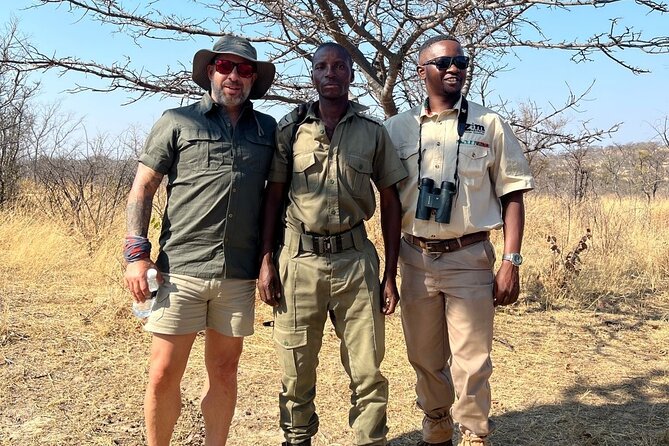
The park rangers add a human side to the wildlife experience. You meet people whose work involves protecting endangered rhinos, and their presence helps explain why a careful approach matters.
A rhino sighting can look effortless from the outside. In reality, it depends on trained people who understand animal behavior, wind, terrain, and safe group movement. The rangers also give the experience a conservation purpose. You are not only seeing a threatened species; you are seeing some of the work required to keep it in the park.
I would pay close attention during this part, especially if you want to understand the difference between responsible wildlife viewing and a casual close encounter. The animals come first. Good photographs are welcome, but only within the limits set by the guide and rangers.
The experience also has a strong local connection. Blessing and Bongani are named as people involved in organizing one outing, and their friendly, efficient handling helped make the day run smoothly. The listed provider is Bushmen Travel Company, so you can expect the activity to be locally organized rather than handled only by a distant booking office.
Barbecue lunch, refreshments, and sunset drinks
A barbecue lunch is provided, along with bottled water, refreshments, snacks, and digital photos. Those inclusions matter on a long outdoor outing, since carrying enough food and water can be one more task to manage.
The meal also creates a natural break between walking and the later sunset stop. Exact serving times are not stated, so do not assume lunch happens at a particular point in the schedule. Your guide will fit it around the wildlife and cave portions of the day.
The final sundowners and snacks are a pleasant idea after several hours outside. Matobo’s rock formations and open savannah should look especially striking as the sun drops, although the precise sunset view depends on the day’s route and weather.
This is not a luxury safari meal with a long menu. Think of it as practical bush hospitality, with a barbecue and simple refreshments included in the day. For $120, that helps the outing feel like a full experience rather than a short paid walk with extra charges added later.
Is $120 a fair price?
At $120 per person, this is not the cheapest way to see Matobo, but the price covers more than rhino tracking. You are paying for a roughly five to six-hour outing, park access arrangements, local guiding, ranger support, transfers, lunch, water, refreshments, snacks, sundowners, and digital photos.
The maximum group size of eight is especially important when judging value. A cheaper activity with a large crowd may give you less time to ask questions and a weaker position during the rhino encounter. Here, the small group supports a more personal pace.
I would consider the price fair for someone who values interpretation, conservation, and walking. If you only want a fast wildlife sighting from a vehicle, you may not use enough of what this tour offers.
The booking pattern also deserves attention. It is booked about 21 days ahead on average, so I would reserve early if your Zimbabwe schedule is fixed. The experience has a 97 percent recommendation rate and a 4.9 rating from 33 ratings, which suggests a strong record, though no wildlife outing can remove the normal uncertainty of nature.
Who will enjoy this experience most?
I would recommend the Rhino Encounter to you if you want close wildlife viewing with a cultural and educational side. It suits photographers, first-time safari visitors, and anyone curious about how people read the bush.
It is also a good match for couples, families with older children, and small groups of friends who prefer a personal guide. Most people can participate, but you should be comfortable walking outdoors and wearing closed-toe shoes for an extended afternoon.
You may want a different activity if you dislike heat, uneven ground, insects, or the possibility of waiting for animals. The experience is active, and the group may spend time interpreting signs before reaching a rhino.
I would also avoid booking it as a rushed add-on between other fixed plans. The stated duration is approximately five hours, while the description also calls it a six-hour experience. Allow a generous window around the 1:00 pm start and the evening finish.
Practical advice for a better afternoon
Wear closed-toe shoes with enough comfort for a bush walk. Khakis, a sun hat, sunscreen, and bug spray are specifically recommended and will make the outing more pleasant.
Keep your camera ready, but do not let it take over. The strongest part of the walk may be learning why the guide chooses one direction or waits for a change in wind.
Follow ranger instructions without argument. Rhinos are wild animals, and the safest encounter is the one that respects their space.
If you have dietary needs, ask about the barbecue when you book. The tour confirms lunch is included, but it does not provide menu or dietary details.
The cancellation terms are simple: you can receive a full refund if you cancel at least 24 hours before the local start time. Changes or cancellations inside that window are not accepted for a refund.
Should you book the Matobo Rhino Encounter?
You should book it if you want a small-group walk that combines white rhinos, local survival skills, ranger conservation, ancient cave paintings, and a barbecue lunch. The two strongest reasons are the maximum eight-person group and the chance to approach rhinos on foot under trained supervision.
I would skip it only if you want a short, vehicle-based safari or if a long afternoon outdoors sounds tiring. For most visitors who have the time and interest, $120 is a reasonable price for the range of activities and included services.
Reserve around three weeks ahead if possible, wear the right clothes, and arrive ready to watch the ground as closely as the animals. In Matobo, the clues before the rhino can be just as rewarding as the rhino itself.
FAQ
Where does the Matobo Rhino Encounter take place?
The experience takes place in Matobo National Park in Zimbabwe.
What time does the tour start?
The stated start time is 1:00 pm.
How long does the experience last?
The duration is approximately five hours, while the description also refers to it as a six-hour experience. Plan for a long afternoon and evening outing.
How many people can join the tour?
The group has a maximum of eight participants.
Is hotel pickup available?
Yes. Pickup is offered, and hotel transfers are included.
What is included in the price?
The $120 price includes the rhino tracking experience, hotel transfers, lunch, bottled water, refreshments, snacks, sundowners, and digital photos.
Can I cancel for a full refund?
Yes. You can cancel at least 24 hours before the experience start time for a full refund. Cancellations or changes made less than 24 hours before the start time are not accepted for a refund.
Just added in Zimbabwe
- Zimbabwe & Zambia side :Private Guided tour of the Falls★ 5.0 · 2 reviews
- Zimbabwe: Sundowner Cruise (Standard) Zambezi River★ 4.8 · 5 reviews
- Zambia : Victoria Falls : Nature Bike Tour★ 5.0 · 2 reviews
- Zimbabwe: Victoria Falls Full-Day Package★ 5.0 · 2 reviews
- Zambezi River: Kid-Friendly Whitewater Rafting★ 5.0 · 3 reviews
- Zambezi Night Game Drive★ 5.0 · 1 review
- Zambezi River: Dinner Cruise★ 5.0 · 2 reviews
- Zambezi 3hr Game Drive★ 4.6 · 5 reviews
Bulawayo and Matobo Hills Tours, compared.

Khami Ruins & Matopos Silunguzi Village Day Tour!
Read our review →
Silunguzi Matopos Village & Rock Paintings Visit !
Read our review →Browse the lists this tour appears in