
REVIEW · GREAT ZIMBABWE AND RUINS TOURS
Khami Ruins Day Trip
Ancient walls wait just outside Bulawayo. The Khami Ruins day trip gives you a close look at Zimbabwe’s second-largest stone-built monument, a 16th-century capital linked to the Torwa Dynasty. I like the private transport and the chance to explore a UNESCO World Heritage Site without joining a large group. I also like that the visit focuses on the actual ruins, not a rushed photo stop.
The main consideration is cost clarity. The tour is priced at $80 per person, but admission tickets, fees, and taxes are not included. You should also allow up to four hours for the full outing, even though the main guided visit is listed at about three hours.
In This Review
- Key points about the Khami Ruins trip
- Why Khami deserves your time near Bulawayo
- The drive from Bulawayo and hotel pickup
- Entering the 16th-century Torwa capital
- What the stonework tells you
- How the guiding shapes the visit
- Is $80 per person good value?
- Who will enjoy this half-day outing?
- A few practical points before you book
- Khami compared with a quick independent visit
- Should you book the Khami Ruins day trip?
- FAQ
- Where is the Khami Ruins day trip based?
- How much does the tour cost?
- How long does the experience take?
- Is hotel pickup available?
- Is this a private tour?
- What is included in the price?
- Is the Khami Ruins admission ticket included?
- Can I cancel for a full refund?
- What happens if bad weather cancels the tour?
Key points about the Khami Ruins trip
- Khami is Zimbabwe’s second-largest stone monument, after Great Zimbabwe.
- The ruins date to the 16th century, when Khami served as the capital of the Torwa Dynasty.
- Hotel pickup is available, with one account describing a punctual pickup in central Bulawayo.
- You explore a private tour setting, so only your group takes part in the excursion.
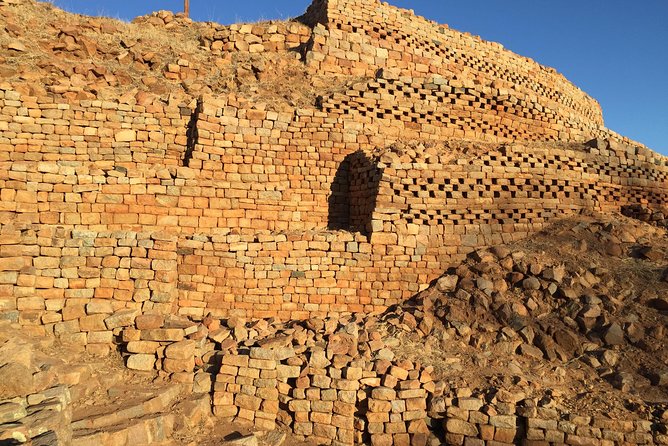
- Dry-stone walls feature chevron and chequered decoration, along with narrow passageways and raised platforms.
- Admission is extra, so add the entrance cost to the advertised $80 price.
Why Khami deserves your time near Bulawayo
Khami is a strong choice if you want more than a quick city outing. The site helps connect two major chapters of Zimbabwean history: the era of Great Zimbabwe and the later Zimbabwe period. Its position between those periods gives the ruins special value for anyone interested in archaeology, architecture, or the development of southern African states.
You are not visiting one isolated wall. Khami is a broad archaeological complex made up of stone platforms, dry-stone enclosures, passageways, and former living areas. The structures were built without mortar, yet the walls display careful planning and skilled workmanship.
The site is also important because it escaped the large-scale destruction caused by treasure hunters at some other archaeological locations. That means the layers beneath and around the ruins have remained unusually useful to researchers. For you, this translates into a place where the layout can be read with greater confidence, rather than a collection of scattered stones with little context.
Khami was the capital of the Torwa Dynasty in the 16th century. The chief’s residence, known as the Mambo, occupied the Hill Ruin, also called the Hill Complex. Below and around this higher area, the wider settlement included daga huts made from cobwork, with granite walls shaping the community.
You will not see the former huts intact in the same way you see the stonework. Their presence is understood through the archaeological remains and the arrangement of the settlement. A good guide helps you picture how the stone platforms, huts, walls, and passageways worked together.
More ruins and heritage sites in Zimbabwe:
- Great Zimbabwe
★ 5.0 · 11 reviews - Great Zimbabwe Tour from Harare
★ 5.0 · 6 reviews - Khami Ruins & Matopos Silunguzi Village Day Tour!
★ 5.0 · 4 reviews
The drive from Bulawayo and hotel pickup
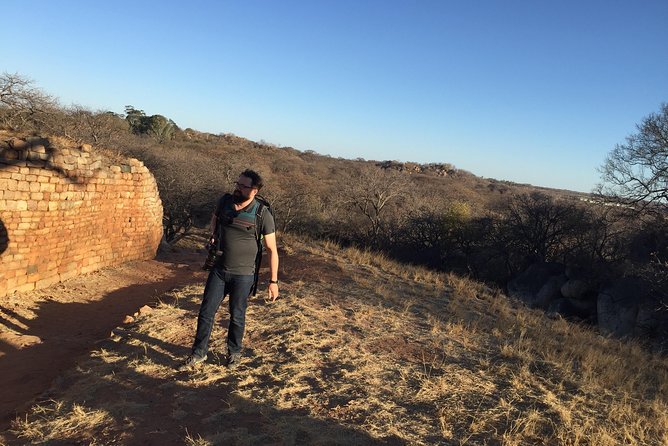
Khami is about 30 minutes from central Bulawayo by road, making it practical as a half-day excursion. That short transfer is one of the trip’s biggest advantages. You can visit an important archaeological site without giving up an entire day to transportation.
Pickup is offered, and private transportation is included. One account describes a hotel pickup that arrived on time, which is useful if you have a limited schedule or a connecting activity later in the day. The vehicle is air-conditioned, and bottled water and snacks are included.
I would still confirm your pickup point and start time when booking. The advertised experience can take between two and four hours, while the ruins visit itself is described as roughly three hours. The difference may depend on driving time, the pace of your group, and how much of the complex you cover.
The private format is especially useful here. Khami has many structures and narrow routes to understand, so you can ask questions and spend more time at the areas that interest you. You are not tied to the pace of a large coach group. At the same time, a private tour does not automatically mean every minute will be filled with commentary, so your experience will depend partly on the guide assigned to you.
Entering the 16th-century Torwa capital
The main stop is Khami Ruins, and this is where the trip earns its place on a Bulawayo itinerary. The site was once the capital of the Torwa Dynasty, and its remains show a planned settlement built around raised stone platforms and enclosed areas.
The Hill Ruin is the key area to understand first. This was the location of the Mambo, or chief’s residence. Its higher position would have given it importance within the settlement, and it provides a useful starting point for understanding the social order of the site.
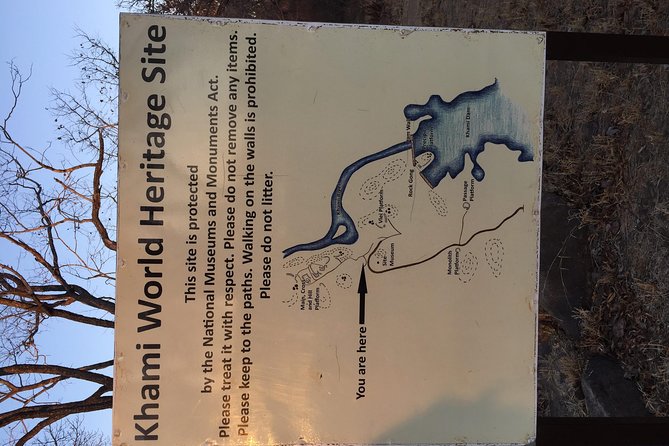
From there, the complex spreads through a series of platforms and walls. The Vlei, Monolith, and Passage platforms are named areas within the ruins. The names may sound dry on paper, but they help separate the complex into sections as you walk through it.
The narrow passageways and perambulatory galleries are among the most interesting features. They show that Khami was not simply a group of round huts surrounded by a wall. The site had movement routes, enclosed spaces, and carefully arranged structures that required planning.
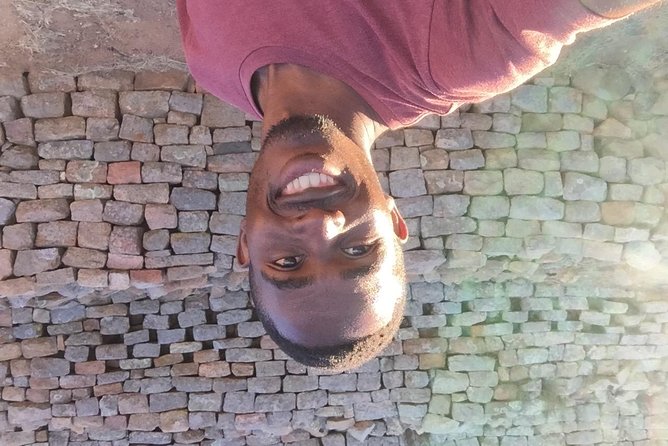
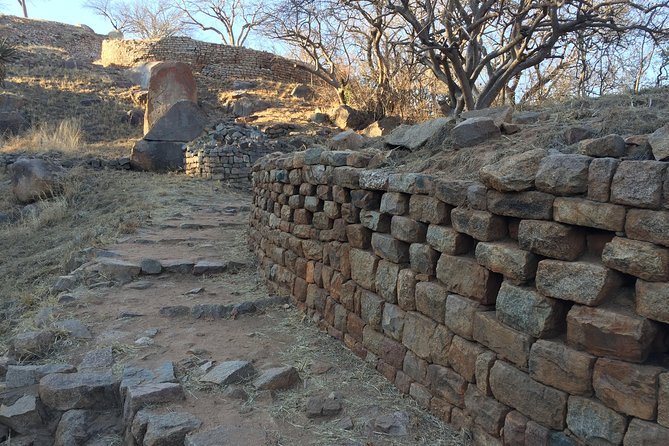
Look closely at the wall decoration. Chevron and chequered patterns appear in the dry-stone work, adding design as well as strength. These details are easy to miss if you only take a quick look from a distance. I would slow down at the decorated sections and ask your guide what is known about their purpose and construction.
What the stonework tells you
Khami’s walls are the main visual attraction, but they are also the best way to read the site’s past. Dry-stone construction depends on selecting and placing stones with care. Without mortar binding the blocks, the shape and balance of each wall matter.
The quality of the workmanship is clear in the platforms, wall lines, and decorative patterns. You can see how the builders used granite to create boundaries and raised areas across the settlement. The remains do not give you a perfect picture of daily life, but they provide a strong framework for imagining it.
The site’s undisturbed archaeological layers add another level of importance. An archaeological layer can contain clues about occupation, building, and change over time. When those layers remain intact, researchers have a better chance of tracing how a settlement developed.
You should approach Khami with curiosity rather than expecting a restored city. There are no reconstructed palaces or fully furnished rooms described here. Much of the pleasure comes from reading the walls, platforms, and gaps between them. A guide can turn those physical remains into a clearer story.
More trips around Bulawayo and the Matobo Hills:
- The Best of Matobo
★ 5.0 · 39 reviews - Matobo Rhino Encounter
★ 5.0 · 33 reviews - Matobo Hills Day Trip with Rhino Tracking
★ 5.0 · 22 reviews - Matopos Half Day Excursion
★ 4.5 · 15 reviews
How the guiding shapes the visit
The strongest praise for this excursion centers on the guiding. Lesley is specifically associated with a punctual hotel pickup and a thorough explanation of the ruins. An on-site local guide may also explain the details of the dry-stone complex.
That local knowledge matters at Khami. The site is large enough to feel confusing if you do not know which platform or wall you are looking at. A guide can point out the Hill Complex, identify the Mambo’s residence, and explain how the other platforms relate to the settlement.
The tour also suits people who want to ask questions. Since it is private, you can focus on archaeology, the Torwa Dynasty, wall decoration, or the role of the site between Great Zimbabwe and later Zimbabwe. If you are producing photographs or video, the private format may give you more time to cover the structures. One visitor completed a full tour of the buildings and structures for a YouTube project.
Guide quality can vary from person to person, so I would tell the operator what you want from the visit. Ask for a history-focused tour if that is your priority. If you want to photograph or record the site, mention that before departure so the pace can be planned sensibly.
Is $80 per person good value?
At $80 per person, this is not the cheapest way to reach Khami, especially because admission and other fees are extra. Still, the price includes private transportation, an air-conditioned vehicle, snacks, bottled water, and pickup service. For someone staying in Bulawayo, those inclusions reduce the need to arrange transport separately.
The value improves if you are traveling as a small private group. Group discounts are offered, although the exact saving is not provided. Since only your group participates, you are paying for a more personal outing rather than a seat on a general coach trip.
I would compare the price with what it would cost you to arrange a vehicle, fuel, and a guide on your own. The tour is most appealing if you want the convenience of hotel pickup and a guide who can explain the archaeology. If you already have private transport and a strong background in Zimbabwean history, the additional cost may feel less attractive.
Remember to budget for the entrance ticket. All fees and taxes are excluded, and the stated itinerary specifically notes that the admission ticket is not included. Ask for the current entrance cost before setting your final budget.
Who will enjoy this half-day outing?
This experience suits you best if you are staying in Bulawayo and want a focused historical excursion. It is also a good match for anyone interested in archaeology, African kingdoms, historic building methods, or UNESCO sites that receive less attention than the country’s most famous monument.
You do not need to be an expert. The site’s walls, platforms, and passageways offer plenty to see even if you arrive with only a general interest in history. The guide support makes the visit more accessible, especially when the remains are difficult to interpret at first glance.
The trip could also work well for photographers and video makers. The stonework includes repeated chevron and chequered patterns, while the separate platforms and galleries provide many subjects to record. However, admission rules for filming, if any, are not provided, so confirm those details if you plan commercial or extensive recording.
Families and mixed-interest groups may find the short travel time helpful. Most people can participate, according to the tour information. Still, the ruins involve walking around stone structures and narrow passageways, so you should ask the operator directly about your personal mobility needs if that is a concern.
A few practical points before you book
The tour can be booked with a mobile ticket, and confirmation is received at the time of booking. It is commonly reserved about 17 days ahead, so advance planning makes sense if your Zimbabwe schedule is fixed.
The cancellation policy is generous up to 24 hours before the start time. You can receive a full refund if you cancel at least 24 hours ahead. Changes or cancellations inside that window are not accepted for a refund.
Weather matters. If poor weather causes the operator to cancel, you should be offered another date or a full refund. The experience also requires a minimum number of participants, and if that condition is not met, you should be offered a different date or experience, or a full refund.
I would choose a morning or cooler time of day if you have a choice, though a specific departure schedule is not provided. Bring sensible walking shoes and sun protection as a general precaution for an outdoor archaeological visit. The operator supplies water and snacks, but you should not expect a meal.
Khami compared with a quick independent visit
You can appreciate Khami’s walls on your own, but the site’s meaning is harder to grasp without explanation. The Hill Complex, Mambo residence, Vlei, Monolith, and Passage platforms are much more useful when someone connects them into a story.
A private guided outing also removes the stress of finding transport from Bulawayo. The drive is short, but a reliable pickup still saves time and makes the visit easier to fit around other plans.
The tradeoff is that you pay a premium for that convenience. If your main goal is simply to see the walls and take a few photographs, an independent visit may be enough if you already have transport. If you want the historical setting explained and prefer a flexible private group, the tour makes more sense.
Should you book the Khami Ruins day trip?
I would book this excursion if you are based in Bulawayo and care about history, archaeology, or Zimbabwe’s lesser-known heritage sites. The short drive, private vehicle, included refreshments, and guide support create a practical half-day plan.
You should book with realistic expectations. Khami is not a reconstructed palace complex, and admission is not included in the $80 price. Its appeal comes from the surviving dry-stone walls, unusual decorative patterns, carefully arranged platforms, and the chance to understand the Torwa Dynasty’s former capital.
Ask about the guide, entrance fee, pickup time, and any filming plans before you go. If those details suit your schedule, Khami is a worthwhile stop and one of the most meaningful historical outings available near Bulawayo.
FAQ
Where is the Khami Ruins day trip based?
The experience takes place in Zimbabwe and visits Khami Ruins, about 30 minutes from central Bulawayo.
How much does the tour cost?
The listed price is $80 per person. Admission tickets, fees, and taxes are not included.
How long does the experience take?
The tour takes approximately two to four hours. The visit to Khami Ruins itself is described as about three hours.
Is hotel pickup available?
Yes. Pickup is offered, and private transportation is included.
Is this a private tour?
Yes. Only your group participates in the activity.
What is included in the price?
The price includes an air-conditioned vehicle, private transportation, snacks, and bottled water.
Is the Khami Ruins admission ticket included?
No. The admission ticket is not included, so you should budget for that separately.
Can I cancel for a full refund?
Yes, if you cancel at least 24 hours before the experience start time. Cancellations made less than 24 hours in advance are not refunded.
What happens if bad weather cancels the tour?
You should be offered a different date or a full refund if poor weather causes the experience to be canceled.
Just added in Zimbabwe
- Zimbabwe & Zambia side :Private Guided tour of the Falls★ 5.0 · 2 reviews
- Zambia : Victoria Falls : Nature Bike Tour★ 5.0 · 2 reviews
- Zimbabwe: Victoria Falls Full-Day Package★ 5.0 · 2 reviews
- Zimbabwe: Sundowner Cruise (Standard) Zambezi River★ 4.8 · 5 reviews
- Zambezi River: Kid-Friendly Whitewater Rafting★ 5.0 · 3 reviews
- Zambezi Night Game Drive★ 5.0 · 1 review
- Zambezi National Park Private Wildlife Safari (4 – 10 hours)★ 4.9 · 9 reviews
- Zambezi River: Dinner Cruise★ 5.0 · 2 reviews
Great Zimbabwe and Ruins Tours, compared.
Great Zimbabwe: The World’s View Historical Site !!
Read our review →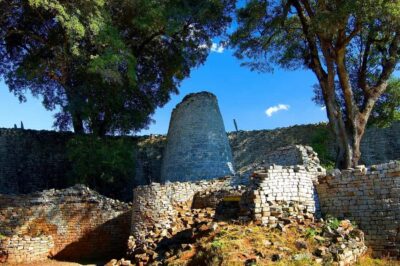
MASVINGO; GREAT ZIMBABWE MONUMENT TOUR – FROM HARARE
Read our review →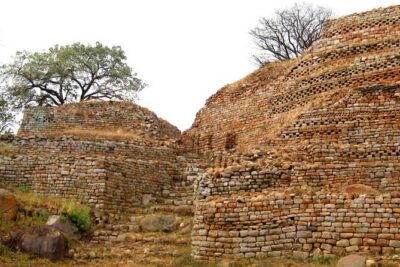
Khami Ruins & Matopos Silunguzi Village Day Tour!
Read our review →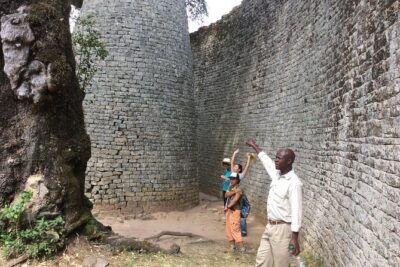
Great Zimbabwe Ruins Tour from Bulawayo with Picnic Lunch !
Read our review →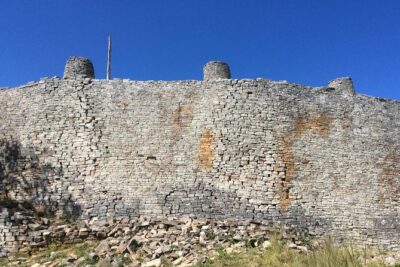

Browse the lists this tour appears in